
Read A Free Sample
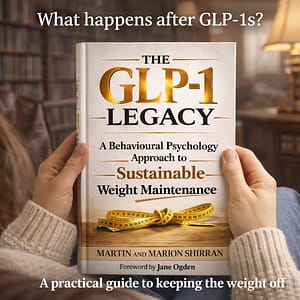
A Preview of The GLP-1 Legacy
This page provides an introduction to The GLP-1 Legacy. The book’s nineteen chapters contain over 300 pages. Below, we introduce sections from three chapters of the book.
- Chapter 3: Microdosing and Tapering off GLP-1s
- Chapter 8: Dopamine, Serotonin and the New You
- Chapter 11: Eating Without the Jab
At the bottom of the page, you can view the full chapter list.
Chapter 3: Microdosing and Tapering (extract)
For many people, the day they take their final jab is a mixture of pride and unease. Pride in what has been achieved; unease about what happens next when the pharmacological quiet in the mind begins to lift. That tension is the backdrop to a growing conversation about how best to step down from GLP‑1 medications without triggering a surge of hunger and cravings, followed by weight regain. For many, hesitation about long-term GLP-1 use is real, whether due to side effects, cost or guidance that they’re not meant for life. What’s equally clear is that stopping suddenly will cause appetite and food noise to quickly resurface.
In response, a growing number of users are exploring options such as microdosing and tapering as a way to ease the transition. In this chapter, we’ll define each approach, show how they differ, look at what the evidence and experts say and offer real‑life examples of how people are navigating life after the jab.
Understanding Two Distinct Strategies

Before we go further, it helps to be precise about what the two terms mean and confirm that, contrary to general belief, they are distinctly different approaches, each tailored to the unique needs of the individual.
- Tapering is a planned, gradual reduction of dose and/or injection frequency until the medication is stopped completely.
- Microdosing is the continued use, possibly for long‑term, at a very low maintenance dose, which is typically well below the therapeutic level.
Think of it this way. Tapering is like walking slowly out of the deep end of a pool until you reach dry land. Microdosing is like staying in the shallows, never fully out of the water but not submerged either. First, let us briefly describe each approach.

What is Tapering?
Because abrupt discontinuation of GLP‑1 medications can often lead to intense hunger and potential weight regain, tapering is used to help the mind and body adjust more gently to life without pharmaceutical appetite suppression.
The tapering approach essentially reverses the standard treatment protocol for GLP‑1s, which typically involves gradually increasing the dose over time. Instead, the process is flipped: for Wegovy, for example, doses may be reduced in stages from 2.4 mg to 1.7 mg, then to 1.0 mg. Similarly, with Mounjaro, the dose might be stepped down from 7.5 mg to 5 mg, then to 2.5 mg as part of a gradual exit strategy. There is some evidence that patients following this approach find the transition less troublesome when ceasing the medication.
Another strategy that can complement dose reduction is gradually extending the time between injections; some people choose to move from weekly dosing to injections every ten days, then gradually to once every two weeks. This can allow appetite and hunger signals to return more slowly, giving both body and behaviour time to adapt. That said, spacing doses in this way should be done thoughtfully and, where possible, with clinical guidance, as individual responses vary and this approach isn’t formally licensed or appropriate for everyone.
The Benefits of Tapering

The goal of tapering is to soften the shock of coming off GLP-1s, lowering the risk of sudden hunger or emotional eating. It also buys time to strengthen behavioural tools and build tolerance. In this way, tapering acts as both a bridge to a medication-free life and a psychological safety net, while new habits are taking hold.
Early data suggest that a slow taper may help prevent immediate weight regain. The European Association for the Study of Obesity website published results of a Danish study by researchers from the digital weight‑loss clinic, Embla. 353 patients who had reached their target weight were placed on a tapering plan. Their weekly semaglutide dose was gradually reduced to zero over about nine weeks instead of stopping outright. During the taper period, patients continued to lose a bit more weight (an additional 2% on average).
The chapter continues with additional in-depth information regarding tapering and a full description of Microdosing. The chapter also includes real-world case studies, detailing just what GLP_1 users should expect.
Chapter 8: Dopamine, Serotonin and the New You (extract)
You may think inconsistency is a personal flaw, a sign you lack discipline or drive, but this isn’t the case. The truth is simpler; your brain is wired to respond to reward, to notice small bursts of pleasure and to follow the paths that seem to promise them again. When the support of the GLP-1s fades, this reward wiring often feels more noticeable. Understanding how brain chemistry steers your choices makes it much easier to build routines that last, not because you force them, but because they start to feel naturally satisfying.
Understanding Your Reward Chemistry
Take something as ordinary as having a biscuit with a cup of coffee or tea. While you were on the medication, you might have walked past the packet without much interest. It barely registered. Once the GLP-1 effect begins to fade, that quiet spark of anticipation can return. You notice the thought, the brief pull towards the cupboard, the sense that it might offer a small, immediate lift. It’s nothing dramatic and nothing out of control. It’s just your brain’s reward system doing what it has always done: nudging you towards a familiar, fast source of pleasure.
This is why motivation alone rarely gets you very far. Motivation rises and falls, sometimes over just a few short hours. Meanwhile, the reward circuits that involve dopamine are still ticking away in the background, helping to decide what catches your attention, what feels tempting and which behaviours start to build momentum. They don’t force you to act, but they do make some choices feel easier to repeat and others easier to let slip once the medication has gone.

Dopamine and Serotonin are not the Same
When GLP-1 medication is reduced or stopped, dopamine-linked reward signals often sharpen first, whereas serotonin-related steadiness can take a little longer to rebalance. As a result, you may well notice old pulls reappearing before your emotional stability has fully caught up. That temporary mismatch can leave you feeling more sensitive to quick rewards and a bit less buffered against everyday pressures. It doesn’t mean you’ve failed or that everything is unravelling; it simply shows that your reward chemistry is adjusting.
The chapter goes on to deliver in-depth information on Dopamine and Serotonin in everyday language, explaining their effects on food intake and provides several insights on approaches that can be incorporated to counteract the effects of coming off GLP-1s.
Chapter 11: Eating Without the Jab (extract)
Coming off GLP-1s often raises the question, ‘How am I supposed to eat now?’ For many people, the fear isn’t about food itself, but about hunger returning, appetite feeling unpredictable, or losing the sense of control the medication once provided.
This chapter will show you how to eat in a way that genuinely satisfies you, supports stable hunger levels and feels sustainable for real life after GLP-1s. With the right knowledge, structure and mindset, staying in control is not only possible, but it’s easily achievable. And what’s more, you don’t need to rely on rigid rules or restrictions; you just need to learn how to work with your body rather than against it.
In the pages ahead, you’ll discover how food can be used strategically to nourish, satisfy and stabilise appetite in a way that naturally supports fullness and balance. When they’re chosen and combined well, everyday foods can actually replicate many of the appetite-regulating effects that people experience when taking GLP-1s. This approach is non-punishing, science-based, flexible and designed to help you feel confident around food and eating, rather than constantly on edge.
To understand why this works, we need to look briefly at how the body regulates hunger, fullness and energy in the first place. Much of that control happens through hormones, the body’s internal communication system. When these signals are supported and working together, eating feels calmer and more intuitive. However, when they’re disrupted, hunger can feel more insistent, erratic or hard to trust.

Food without Fear: A New Relationship
One of the most common feelings post-GLP-1 is fear: that hunger will return unchecked, that cravings will spiral out of control and that weight regain is inevitable. These concerns are valid, but they’re not your destiny.
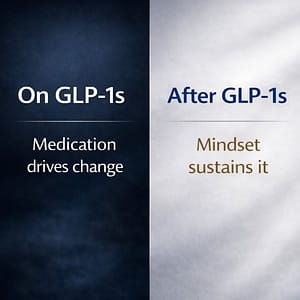
Research indicates that many people can successfully maintain their weight loss if they focus on healthy behaviour and lifestyle changes, particularly with regard to diet and emotional eating. Basically, the medication helped jump-start your journey, but your habits will carry you the rest of the way. This emphasis on healthy habits will help you to feel more in control of your weight management.
Chapter 11, ‘Eating without the Jab’, is one of the longest chapters in the GLP-1 Legacy book. It concludes with a real-world case study.
Contents
Chapter 1: The Next Chapter of Your Life
Chapter 2: GLP-1s: The Effects and Aftermath
Chapter 3: Transitioning off Treatment
Chapter 4: Rewiring Your Mindset
Chapter 5: Navigating Triggers and Emotional Eating
Chapter 6: Redesigning Your Future
Chapter 7: Why Habits Matter More Than Motivation
Chapter 8: Dopamine, Serotonin and the New You
Chapter 9: Sleep, Stress and the Hormone Reset
Chapter 10: Identity, Confidence and Body Image
Chapter 11: Eating Without the Jab
Chapter 12: Navigating Restaurants and Social Eating
Chapter 13: Alcohol, Sleep and Cortisol
Chapter 14: Movement That Matches Your Life
Chapter 15: The Weight Regain Safety Net
Chapter 16: Staying the Course for Life
Chapter 17: The Horizon Ahead
Chapter 18: Alice from Bedfordshire
Chapter 19: If Only I’d Known!
If you’re not sure whether getting your hands on a copy of the book is the right move, then why not visit the book’s page on Amazon and read the many global reviews from both GLP-1 users and clinicians? That will give you a clear sense of how it’s being used in practice and the difference it’s making for people around the world who are navigating life after the medication.
For millions of people across the world, GLP-1 injections have done something extraordinary; they have silenced the constant chatter about food, reduced cravings and restored a sense of control that for years felt out of reach. For many, that shift feels almost surreal, as though someone has finally found the mute button in their mind and pressed it.
People spend months, sometimes years, learning how to live with GLP-1s. They learn how to inject them, work around side effects, adjust their meals and build routines around the rhythm of the medication. Then, often quite suddenly, they are expected to live without them, with very little guidance.
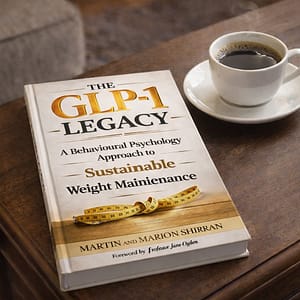
The GLP-1 Legacy book was written to address the void that exists around the often non-existent aftercare required to help users transition off GLP-1s, whilst not regaining the lost weight. It draws on over 15,000 hours of behavioural work with clients, combined with real experiences from GLP-1 users, to explain what happens after the injections stop and how to respond to it. It covers managing returning appetite, handling triggers, rebuilding structure and creating a realistic plan for long-term weight stability. The book includes an introduction by Professor Jane Ogden, health psychologist at the University of Surrey.
Continue Reading
This is just the beginning: The GLP-1 Legacy explores how to maintain weight loss as medication changes, with practical strategies that can be applied in everyday life.

Read our new page that explains how to transition off GLP-1s safely.