
Oxford Therapeutics London
The GLP-1 Legacy
Life After Ozempic, Wegovy and Mounjaro

What Happens When The Medication Stops?
What happens after Ozempic, Wegovy or Mounjaro? For many people, the real challenge begins when the GLP-1 treatment pathways end. Appetite returns. Weight regain becomes a real risk. And most people are not prepared for what happens next. GLP-1 injections such as Ozempic, Wegovy and Mounjaro can help people reach their target weight. But maintaining that weight needs a different kind of support. The GLP-1 Legacy is a Stage Two aftercare guide: one practical tool to help you maintain your weight loss after GLP-1 treatment.
The new book, The GLP-1 Legacy, was written to address this gap. It’s built on over 15,000 hours of one-to-one behavioural work in the weight-loss arena, including more than 100 in-depth interviews with GLP-1 users.
The book includes a foreword by Professor Jane Ogden, Professor of Health Psychology at the University of Surrey, whose work has significantly contributed to the understanding of eating behaviour and long-term weight management. Her involvement provides an academic perspective on the behavioural challenges associated with weight maintenance after GLP-1 treatment.
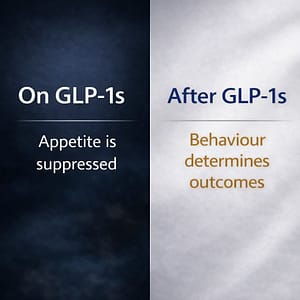
After GLP-1s, is where the challenge begins
When GLP-1 users are transitioning off the medication, appetite quickly returns, and food becomes more compelling, so maintaining weight loss requires much more behavioural effort. The support that made weight loss feel manageable is no longer in place. The challenge is real and is being reported by GLP-1 users in both the UK and the US.
The top two questions entered into search engines by users clearly identify their concerns. They asked, “Will my appetite come back when I stop taking GLP-1s?” The answer is yes, and most people aren’t prepared for it. The second question was, “Is weight regain common?” The answer again is yes, especially for those without an exit plan.
When Support Falls Away
GLP-1 treatments are intended to be combined with behavioural and lifestyle input alongside the medication. In practice, however, that level of structured guidance is often limited or, in some cases, almost non-existent. As a result, many users are turning to the internet for advice. It was this consistent pattern of anxious people searching for answers that led to the research, writing and publication of the new book The GLP-1 Legacy.
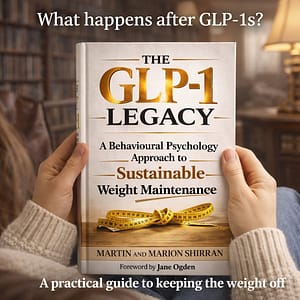
About The GLP-1 Legacy
The GLP-1 Legacy was written to support users both during and after GLP-1 treatment, particularly as medication is reduced or stopped and more responsibility begins to shift back to the individual. The authors, Martin and Marion Shirran, explore the patterns, habits and psychological factors that influence how weight loss can be sustained once the medication is no longer doing the heavy lifting. The GLP-1 Legacy – Oxford Therapeutics.
Whether read during GLP-1 treatment or after it has stopped, the book focuses on helping changes become more sustainable. While appetite is reduced and food thoughts are quieter, it creates a window where those changes are easier to put in place. As one reviewer noted, they wished they had read it earlier, when far less effort would have been required.
If you’re not sure whether or not reading the GLP-1 Legacy is right for you, then read the Amazon verified reviews from both GLP-1 users and clinicians. That will give you a clear sense of how it’s being used in practice and the difference it’s making for people around the world who are navigating life after the medication.

What the Book Explores
From our work with people using GLP-1s and the broader conversations around it, the same questions come up repeatedly:
- How do I maintain this weight loss?
- Is it actually possible to keep it off?
- What happens when my appetite returns?
- How long do the effects of the medication last after stopping?
- Why does weight regain happen, even when I’m trying?
- What habits really make a difference long term?
It also introduces emerging approaches such as tapering and microdosing strategies, helping readers think more carefully about how they transition away from medication, rather than stopping abruptly without a plan. The book explores the interaction among biology, behaviour and the environment, and outlines practical approaches to sustaining progress.
Clinical Perspective

Why Maintenance Matters
GLP-1 medications are proving highly effective for supporting weight loss. However, they do not in themselves establish the habits, routines or cognitive patterns required for long-term maintenance. When medication is reduced or withdrawn, appetite returns and the behavioural drivers that influenced eating before treatment often reappear. Without a transition plan, many former users find themselves managing the same challenges as before, but now without the support of the medication. This is where weight regain most often begins.
Understanding and preparing for this post-GLP-1 phase is central to maintaining outcomes and protecting the progress that has already been achieved. The pages on this website provide an overview of The GLP-1 Legacy, including an introduction to the authors and an expanded synopsis.
GLP-1 Legacy – Oxford Therapeutics
For clinicians working within limited consultation time, the book provides a practical resource that patients can use independently, both during their weight-loss journey and as they transition off the medication. Healthcare professionals are increasingly recommending it as a tool to support patients beyond prescribing, particularly at the point where behavioural strategies become critical to maintaining results.

Intended Audience
This site and the book are intended for:
- individuals who are using or have used GLP-1 medications and wish to maintain their weight loss
- healthcare professionals seeking a behaviourally informed resource to support patients during and after treatment
FDA
In the United States, the Food and Drug Administration (FDA) has mandated that GLP-1 weight-loss medications be prescribed in conjunction with a behavioural change programme. The FDA’s approach aims to ensure that patients not only lose weight but also adopt healthier lifestyle habits, which is crucial for maintaining their weight loss in the long term. This regulatory stance underscores the necessity of a comprehensive treatment plan, as detailed on this website.
NICE
Similarly, the National Institute for Health and Care Excellence (NICE) in the United Kingdom advocates a multifaceted approach to weight management. NICE recommends that weight-loss medications, including Ozempic, Wegovy and Mounjaro, be integrated into a comprehensive weight management programme. The Guidance from Nice aims to deliver long-term health benefits and improved quality of life for patients.
Marion Shirran, the co-founder of Oxford Therapeutics and the co-author of The GLP-1 Legacy, is a NICE stakeholder and a member of the All-Party Parliamentary Group on Obesity.

If you’re looking to understand what happens after stopping GLP-1s, we have numerous blog posts covering the questions most people are asking right now, from how quickly appetite returns and what drives weight regain, to practical ways of maintaining control without medication.
Start with our detailed breakdown of what happens after stopping GLP-1 medications, explore how much weight regain to expect, and learn how quickly appetite returns after Ozempic. You can read our post about what happens after coming off GLP-1s. You can also read about how long GLP-1 medications stay in your system, practical strategies for maintaining weight loss after Wegovy, and our guide to microdosing and tapering GLP-1 injections for a more gradual transition.
